

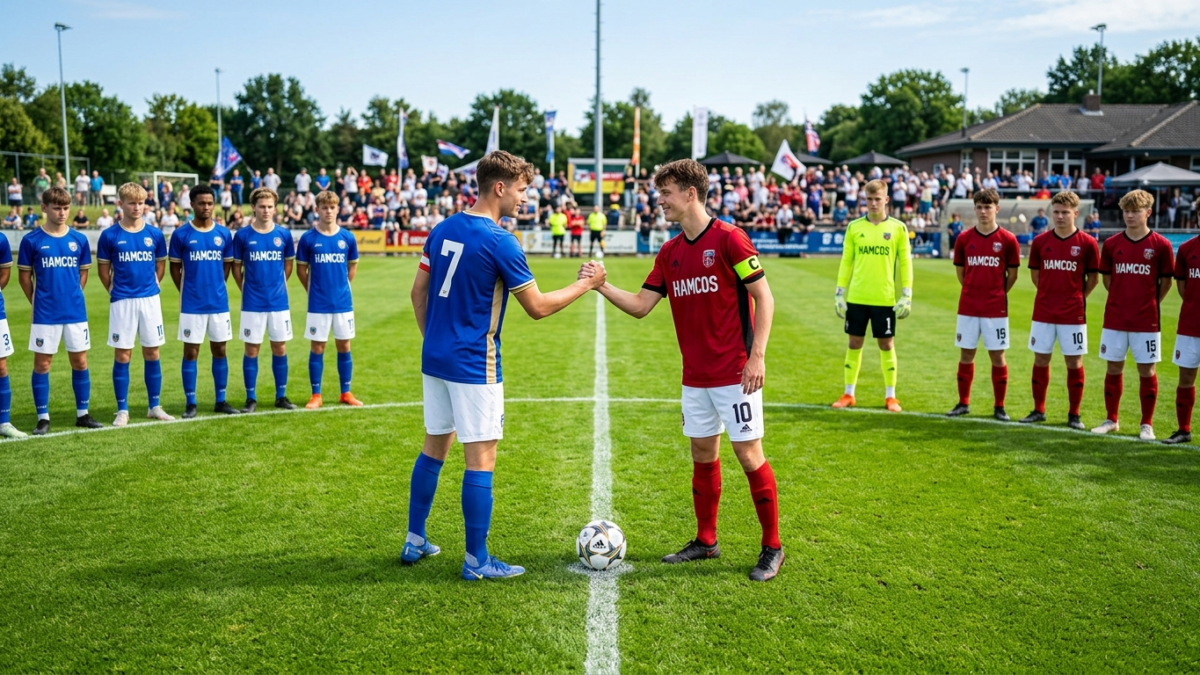
Choosing the right soccer team colors guide your team’s entire visual identity for years, possibly decades. A soccer kit color combination that works beautifully creates immediate recognition in your community, photographs well across all media, and gives players and supporters a visual symbol to rally around. Getting it wrong means expensive rebranding conversations later. This guide covers soccer kit color selection from the perspective of color psychology, FIFA and league regulations, home and away strategy, and custom soccer uniform design principles to help you make the decision confidently and correctly the first time.
Soccer kit colors carry enormous psychological and cultural weight in the sport. The red of Manchester United and Liverpool. The blue and gold of Boca Juniors. The all-white of Real Madrid. These color identities are so deeply embedded in the clubs’ cultures that they predate living memory. While your local youth club or recreational team is not building a century-long tradition on day one, the color choice you make today shapes how your community perceives your program from the very first season.
Why Soccer Kit Colors Matter More Than You Think
Research in sports psychology and consumer behavior consistently finds that color creates immediate emotional and cognitive responses. Red is associated with energy, aggression, and dominance. Blue evokes calm, trust, and strategic sophistication. Green suggests growth, connection to natural environments, and freshness. Black projects authority and power. Yellow and gold communicate optimism, creativity, and positive energy.
These associations are not absolute — cultural context modifies how colors are perceived — but they provide a useful framework for thinking about what your team’s color identity communicates to opponents, supporters, and the broader community. A youth soccer club choosing its first colors benefits from thinking deliberately about what the colors say about the program’s values and aspirations.
FIFA and League Kit Color Regulations
FIFA regulations require that teams competing in the same match wear kit colors that are sufficiently different to allow officials, players, and spectators to clearly distinguish between them. When kit colors are too similar, the away team is required to change. FIFA also specifies that goalkeeper jerseys must be a color that clearly distinguishes the goalkeeper from all outfield players on both teams and from the officials.
Most youth and recreational soccer leagues follow similar principles without the same level of regulatory specificity. The practical standard is straightforward: your home and away kits should look clearly different from one another under all lighting conditions. Confirm your league’s specific color conflict resolution rules before finalizing your kit design. For international kit regulations, review FIFA’s guidelines.
Home vs Away Soccer Kit Color Strategy
Traditional soccer kit strategy uses light colors — white, cream, or pastel — for home kits and dark colors or team primary colors for away kits. This convention exists because lighter colors are easier for opposing teams to clearly contrast against on dark away grounds, and because home teams hosting in their own stadium want to maximize visual presence for their supporters.
Modern custom soccer team uniforms have more flexibility than traditional convention suggests. Many programs operate two kits with completely distinct designs rather than simply inverting the color relationship between home and away. A program with strong red and black team colors might use a red home kit with black accents and a black away kit with red accents — creating visual distinction while maintaining complete color identity consistency.
Popular Soccer Kit Color Combinations in 2026
The most effective soccer kit color combinations create strong visual contrast between the primary jersey color and the number, name, and accent elements. Here are proven combinations that work beautifully in custom soccer uniform design: royal blue and white with gold accents, black and neon yellow or neon green, deep red and white, forest green and gold, navy and light blue, all-white with red and blue trim, and burgundy with sky blue accents.
For youth recreational programs, avoid color combinations already in heavy use by major local high school programs. If the local high school’s colors are navy and gold, using the same palette creates visual confusion in the community and positions your club as derivative rather than distinctive.
Custom Soccer Uniform Color Design Process
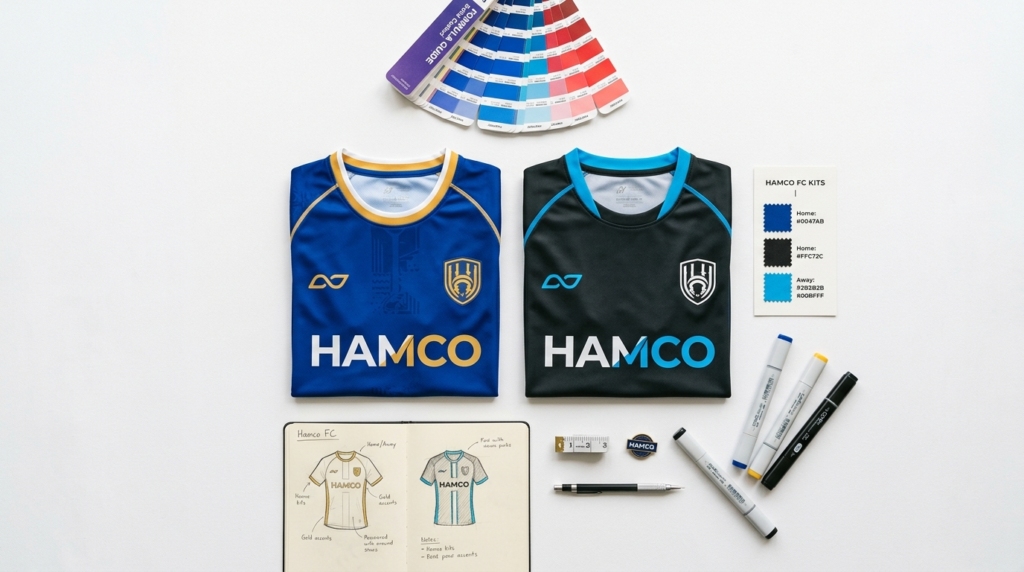
The custom soccer kit color design process begins with selecting your primary jersey base color. This is the dominant color that covers the majority of the jersey surface and defines the kit’s immediate visual impression. Secondary accent colors appear in side panels, collar treatments, shoulder yokes, and detail elements. Tertiary trim colors appear in outline borders, number outlines, and small graphic elements.
For custom sublimated soccer team uniforms, color accuracy is achieved through Pantone color matching or digital color codes. When ordering custom soccer kits, provide your provider with specific color references — not descriptions like ‘royal blue’ which mean different things to different people, but specific Pantone numbers or hex color codes that ensure your jersey matches your exact vision.
Goalkeeper Kit Color Requirements
The goalkeeper kit must be clearly distinguishable from all outfield players’ kits on both teams and from the referee’s uniform. This requirement effectively means the goalkeeper must wear a third color combination entirely different from both teams’ outfield kits. Most programs designate a specific goalkeeper kit color system when designing their complete uniform package to avoid game-day color conflict surprises.
Common goalkeeper kit choices that tend to work across different opponent color systems include bright yellow, orange, bright green, or all-black. Custom sublimated goalkeeper jerseys can be designed with the same graphic style and font system as the outfield jerseys to maintain visual program coherence while meeting the color distinction requirement.
Frequently Asked Questions
Frequently Asked Questions
Q: Can youth soccer teams choose any colors?
A: Yes, within the constraints of your league’s requirements. Most recreational youth leagues allow any color combination. The primary practical requirement is that your home and away kits are clearly distinguishable from each other.
Q: What is the most popular custom soccer jersey color?
A: Royal blue and red are the most popular primary jersey colors globally in soccer, inspired by the dominance of clubs wearing these colors at the professional level. In the United States, navy, red, and green are particularly common in youth soccer programs.
Q: How do I match my soccer kit colors across jerseys, shorts, and socks?
A: When ordering a complete custom soccer kit, provide your color specifications and the design team will match across all three garment pieces. This is the major advantage of ordering a complete custom kit from a single provider rather than mixing pieces from different suppliers.
Q: Can I use gradient colors in a custom soccer jersey?
A: Absolutely. Custom sublimated soccer jerseys support gradients, color transitions, and any number of complex color elements at no additional cost compared to simple solid-color designs.
Q: How often should a soccer club redesign its kit?
A: Most professional clubs redesign every one to two seasons. Youth and recreational clubs typically use the same kit design for three to five seasons for budget efficiency. A kit refresh with updated colors or graphic elements every few years keeps the program feeling current.
Choosing the right soccer kit colors is a decision that deserves careful thought because you will live with it for years. Use color psychology as a guide, ensure your home and away kits create clear contrast, confirm any league color conflict rules, and work with a custom soccer uniform provider who can execute your vision with precise color matching and professional design quality. Your kit is your team’s flag — make it one worth flying.
